
Learn / Where robots are going · 2 min read
Robots at work today
What machines already do at work, and what they leave for you
Most robots sold for work outside factories drive themselves, like the ones that carry goods in warehouses or scrub open floors. Almost 200,000 service robots were sold for business use around the world in 2024. Wiring, repairs, installs and detail work are still done by people.
Robots that drive are already here
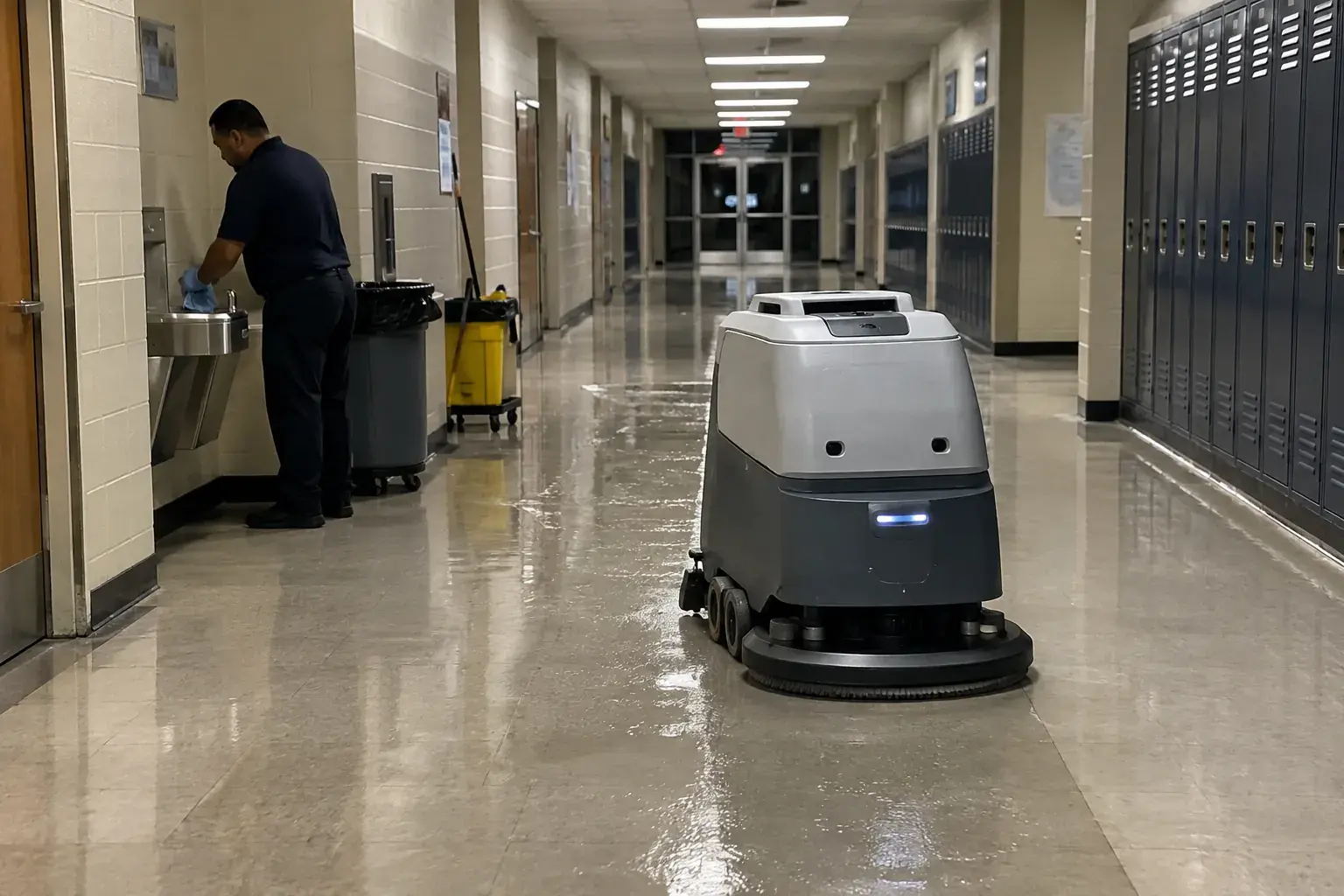
Walk into a big warehouse and you may see a robot carrying a bin down an aisle. Walk into a school at night and you may see a floor scrubber driving itself down the hall. The International Federation of Robotics counted almost 200,000 service robots sold for business use in 2024, up 9% from the year before.
About half of them were built to move goods from place to place. Next came robots that guide and help people in stores, malls and front desks (more than 42,000), then robots that mostly scrub floors (more than 25,000) and farm robots (close to 19,500).
Why driving jobs came first
Moving a bin or scrubbing an open floor is one of the easiest jobs at a work site for a machine. The path is flat and wide, and the task stays the same every day: drive, carry or scrub, and avoid people.
A robot like that doesn't have to pick up a small part or turn a screw, so it only needs wheels, a motor and good sensors. That is a much simpler machine than one with hands.
What they leave for you
Robots like these need someone to charge them, load them and clear the path. Someone also has to do the corners and edges a floor robot can't reach, and step in when a robot stops for a box in the aisle.
The rest of the work is untouched. No robot you can buy today wires a panel, fixes a leaking pipe or swaps the brakes on a car, and at most work sites hand work like that is most of the job.
If a robot shows up at your site, it will most likely take a driving job, like carrying loads or scrubbing an open floor. The hand work in your video, like wiring, repairs and installs, is the part robot teams still can't do.
What other owners ask
Do these robots replace the person who did that job?
At some big sites they take over the drive that repeats every day, but someone still runs, charges and fixes them, and people still do the hand work around them. How much time that saves depends on the site.
Are these robots cheap?
Prices vary by maker, and more and more companies rent them by the month instead of buying them. The number rented that way grew 31% in 2024. They make the most sense in large open spaces like warehouses and airport halls.
Where to read more
These are public examples from other companies. They are not Colby partners or customers.