
Learn / Where robots are going · 2 min read
Robots in cleaning today
What machines already do in buildings, and what they leave for you
The robots working in buildings today mostly clean open floors. More than 25,000 cleaning robots were sold for business use around the world in 2024. They drive a route and scrub or vacuum. Restrooms, desks, trash and spot work are still done by people.
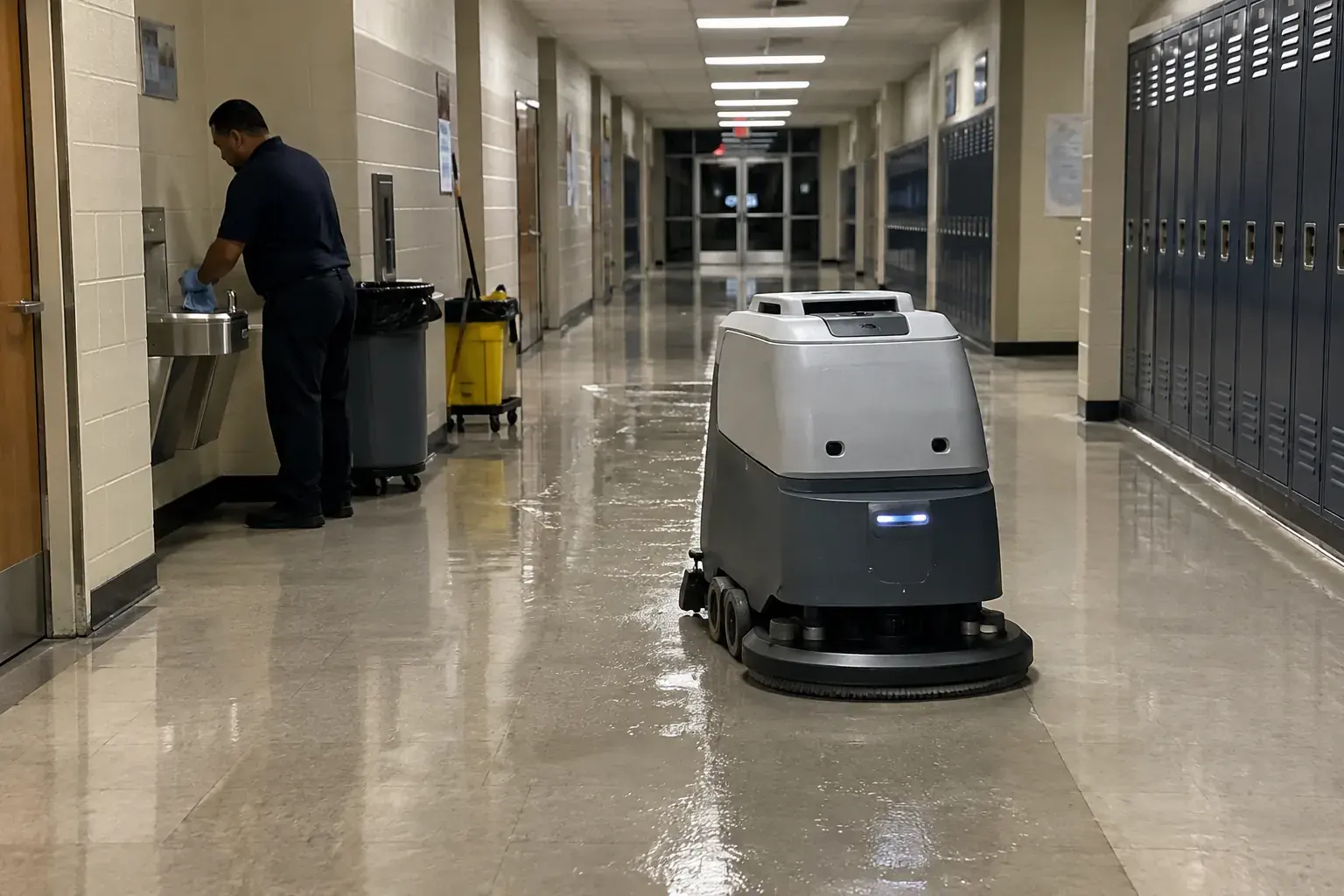
Floor robots are real and growing
Walk into a big store at night and you may see a scrubber driving itself down an aisle. These are the most common cleaning robots. The International Federation of Robotics counted more than 25,000 sold for business use in 2024, up 34% from the year before. Floor cleaning was the main job.
One software company, Brain Corp, says more than 50,000 robots run its software. That includes floor scrubbers and vacuums, plus robots that scan store shelves. In 2026 it began letting Tennant's robot scrubbers plan their own routes, so a worker no longer has to drive the route first to teach it.
Why floors came first
An open floor is the easiest job in the building for a machine. It is flat and wide. The task stays the same every night: drive, scrub, avoid people.
A scrubber doesn't have to pick anything up. It needs wheels, a brush and good sensors. That is a much simpler machine than one with hands.
What they leave for you
Robot scrubbers need someone to fill and dump the tanks, charge them and clear the path. Someone has to hit the corners and edges they can't reach. Someone checks the work when they stop for a box in the aisle.
The rest of the shift is untouched. No robot you can buy today cleans a toilet, empties desk-side trash cans or wipes fingerprints off a glass door. In most buildings that is most of the job.
If a robot scrubber shows up at your site, it takes the open floor. The hand work in your video, like restrooms and desks, is the part robot teams still can't do.
What other owners ask
Do floor robots replace the floor tech?
In some big buildings they cover the nightly scrub. Someone still runs them and empties them. People still do edges, stripping and waxing. How much time that saves depends on the building.
Are these robots cheap?
Most are rented or paid for by the month, and prices vary by maker. They make the most sense in large open spaces like warehouses and airport halls.
Where to read more
- International Federation of Robotics: World Robotics 2025 service robots (October 2025)
- Brain Corp: About (fleet numbers)
- Brain Corp: BrainOS Clean 2.0 for Tennant robot scrubbers (March 2026)
These are public examples from other companies. They are not Colby partners or customers.